










The best Pipedrive alternatives in 2026 are NetHunt CRM for Gmail and Google Workspace teams, HubSpot for marketing-led teams, Zoho CRM for low-cost customization, Freshsales for affordable sales CRM, Salesforce for enterprise sales teams, monday CRM for visual workflows, Close for high-volume calling, Salesflare for automatic data capture, Salesmate for built-in calling and SMS, and Copper for a simple Google Workspace CRM.
Pipedrive is designed for sales CRM and pipeline management, and it's still one of the easiest CRMs on the market to adopt. Pipedrive works well for teams that mainly need to track deals: its visual pipeline is clean and quick to learn. Growing teams usually start looking for a Pipedrive alternative for three reasons:
- Costs grow as you add users, add-ons or higher-tier features.
- Marketing, messaging and customer communication happen outside the CRM.
- Automation, reporting and customization feel too limited for the way the team sells.
This list of Pipedrive alternatives is built around those gaps, because the best CRM for your team depends on which one matters most. We compared each CRM on pricing for a 5-user team, automation, native communication channels, customization, adoption and support. NetHunt CRM is our product, so we say clearly where it fits and where it doesn't.
Pipedrive CRM alternatives at a glance
Nine of the ten top Pipedrive alternatives cost less than Pipedrive Growth for a 5-user team. Close costs more because it specialises in high-volume calling. Prices are entry paid plans, billed annually, in USD.
| Tool | Best for | Entry plan (per user/month) | 5 users/month | Free plan | Messaging apps (WhatsApp etc.) | Main limitation |
|---|---|---|---|---|---|---|
| Pipedrive (baseline) | Simple visual pipeline | $14 Lite; $39 Growth (first plan with automations) | $195 on Growth | No | Marketplace apps only | Add-ons for campaigns and lead gen |
| HubSpot | Marketing-led teams | $20 Sales Hub Starter | $100 | Yes | Yes, on higher plans | Steep jump to Professional |
| Zoho CRM | Budget teams, Zoho users | $14 Standard | $70 | Yes, up to 3 users | Via extensions | Inconsistent UI, steeper setup |
| Freshsales | Lowest per-seat cost | $7 Growth | $35 | No | Via Freshchat (separate product) | Less customizable |
| Salesforce | Large, complex sales orgs | $25 Starter Suite | $125 | No | Separate licence | Implementation cost |
| NetHunt CRM | Gmail and Google Workspace teams | $24 Basic | $120 | No | Yes: WhatsApp, Instagram, Telegram, Messenger, Viber | No free plan |
| monday CRM | Teams already on monday.com | $12 Basic (3-seat minimum) | $60 | Yes, up to 2 seats | Via integrations | Thin native sales features |
| Close | High-volume inside sales | $49 Startup | $245 | No | No | Minimal marketing tools |
| Salesflare | Less manual data entry | $29 Growth | $145 | No | No | Advanced workflows on higher plans |
| Salesmate | Built-in calling and SMS | $23 Basic | $115 | No | No | Sales-only, like Pipedrive |
| Copper | Simple Google Workspace CRM | $23 Basic | $115 | No | No | Automation only from Professional ($59) |
Prices verified on September 28th, 2026 on each vendor's pricing page.
How much does Pipedrive cost in 2026?
Pipedrive costs $14 to $79 per seat per month on annual billing, or $24 to $99 on monthly billing. In 2025 it replaced its five older plans (Essential, Advanced, Professional, Power, Enterprise) with four: Lite, Growth, Premium and Ultimate.
| Plan | Annual billing (per seat/month) | Monthly billing (per seat/month) | 5 seats per year (annual billing) |
|---|---|---|---|
| Lite | $14 | $24 | $840 |
| Growth | $39 | $49 | $2,340 |
| Premium | $59 | $79 | $3,540 |
| Ultimate | $79 | $99 | $4,740 |
Growth is the practical starting point for most sales teams, because it is the cheapest plan with two-way email sync and the automation builder. The per-seat price is only part of the bill:
- LeadBooster (chatbot, web forms, Prospector) is a paid add-on on Lite and Growth, billed per company. It is included on Premium and Ultimate.
- Projects is bought per seat on Lite and Growth, and included on Premium and Ultimate.
- Campaigns (email marketing) is a separate add-on.
- Phone support is available only on Premium and Ultimate.
For a 5-person team, moving from Lite to Growth adds $1,500 a year. Each new salesperson on Growth adds $468 a year. See what Pipedrive actually costs with add-ons for real team examples.
What are the downsides of using Pipedrive?
Pipedrive's main downsides are add-on costs, a sales-only scope, fixed data objects and limited native messaging. None of these make it a bad product. They mark the point where a pipeline tool stops covering the whole revenue process.
| Downside | What it looks like day to day | What to look for instead |
|---|---|---|
| Add-on costs | Lead capture, email campaigns and projects are extra on lower plans, so the real price rises above the list price | Plans that include marketing and lead capture |
| Sales-only scope | Marketing, support, onboarding and project management run in other tools with their own contact lists | A full CRM with marketing and sales on one database |
| Automation gated by plan | Lite has no automation builder; teams pay for Growth to automate follow-ups | Workflow automation on the entry plan |
| Fixed core objects | You work with Deals, People, Organizations, Products and Projects, and can't add your own record types | Custom objects, folders or modules |
| No native messaging apps | WhatsApp, Instagram and Telegram conversations need marketplace apps, so chats that close deals often stay on reps' phones | Native messenger inboxes linked to CRM records |
| Reporting depth | Forecasting and advanced analytics sit on higher plans | Custom dashboards on the plan you'll actually buy |
| Support access | Phone support only on Premium and Ultimate | Live support on every plan |
In Reddit threads about Pipedrive alternatives, users describe the same pattern. The most common complaint is paying for one add-on, then finding the better version costs more again. The second is that Pipedrive lacks the built-in SMS and follow-up tools small sales teams need. We break these down in the most common Pipedrive problems users report and what you can't automate in Pipedrive.
How we evaluated these Pipedrive alternatives
When comparing Pipedrive with each alternative, we looked at six criteria, from pricing to core CRM features, that match the most common reasons teams leave.
| Criterion | What we checked |
|---|---|
| Total cost for 5 users | Entry plan price on annual billing, plus any add-ons needed to match Pipedrive Growth |
| Automation | Whether a workflow builder is available on the entry plan, and whether it supports multi-step workflows |
| Channels | Which of email, messaging apps, LinkedIn and SMS are handled natively rather than through third-party apps |
| Customization | Custom fields, pipelines and custom record types |
| Adoption | How much setup a new rep needs before logging deals and follow-ups |
| Support | Live chat, phone support and onboarding on the entry plan |
Pricing comes from each vendor's public pricing page, checked on September 28, 2026. Feature details come from vendor documentation and help centers. User sentiment comes from G2 reviews and discussions on Reddit's r/CRM. We don't rank tools with a single score, because the right choice depends on which of these gaps matters most to your team. The "Best for" labels and the decision table below reflect that.
NetHunt CRM is our product. We compare it on the same criteria as every other tool and list its limitations in its review. We update this page every quarter. If you spot outdated pricing or features, email us at [support@nethunt.com].
Methodology by Anna Pozniak, CMO at NetHunt CRM. Anna has spent six years at NetHunt leading go-to-market strategy and positioning in the CRM market, and reviewed each tool's public pricing and documentation for this comparison.
The 10 best Pipedrive alternatives in 2026
Each review follows the same format: why teams move to it from Pipedrive, strengths, limitations, pricing and who should choose it.
1. NetHunt CRM: best Pipedrive alternative for Gmail and Google Workspace teams
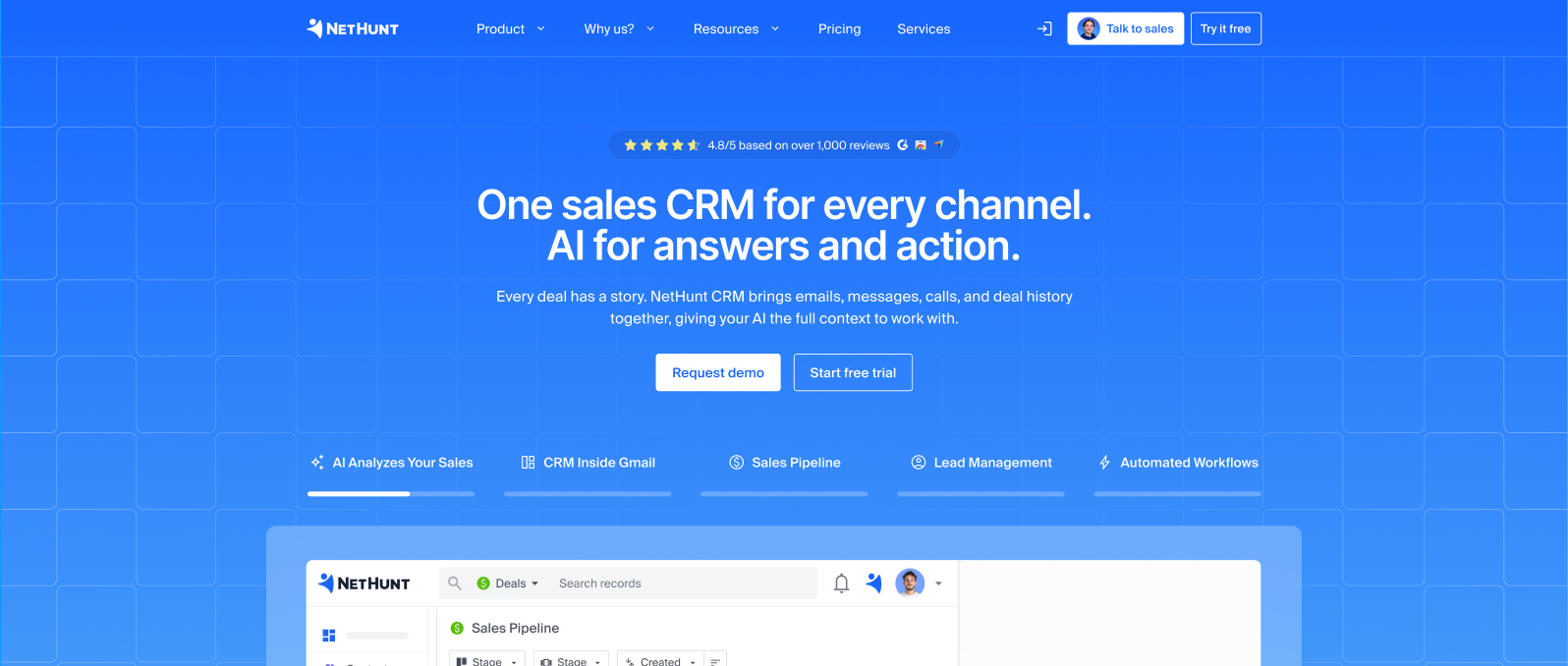
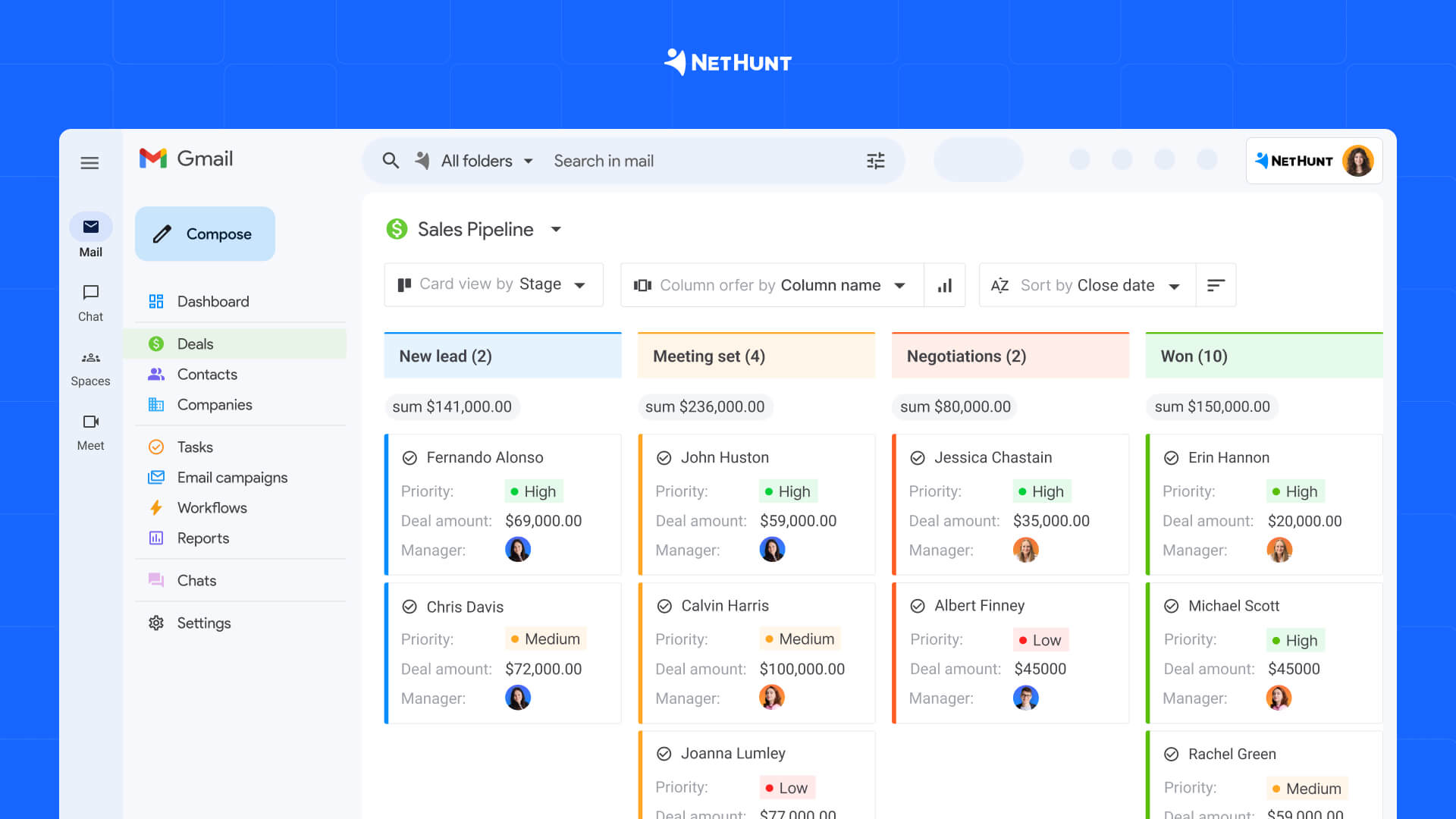
NetHunt CRM is a Pipedrive alternative that works inside Gmail, so reps manage deals, contacts and follow-ups in the inbox they already use. Compared with Pipedrive, it adds native messaging apps, custom record types and multi-step automation on every plan, without paid add-ons.
Strengths
- Native Gmail and Google Workspace integration: Google Contacts sync, Calendar events and Drive files linked to records, Google Chat conversations logged, Looker Studio/BigQuery dashboards.
- Messaging apps in the CRM: WhatsApp, Instagram, Telegram, Facebook Messenger and Viber conversations create records and can be answered from NetHunt.
- Custom folders, fields, record types and web forms, plus unlimited pipelines on every plan.
- Multi-step workflows: lead capture from forms, messengers, lead distribution, stage-based tasks, drip campaigns. webhooks, etc.
- Support for the MCP standard: connect AI tools such as ChatGPT and Claude to your CRM data to search, create and update records.
- All-inclusive plans with no paid add-ons.
Limitations
- No free plan; a 14-day free trial instead.
- Built around Gmail, so teams on Outlook get less value.
Pricing: from $24 per user/month on annual billing ($30 monthly). Annual billing saves 20%.
How customers use it
| Company | Type | Result |
|---|---|---|
| Epom | Ad tech company | +45% MQLs; 80% of billing tasks automated |
| Sijak Media | Digital agency | Deals closed 20% faster with automated outreach and follow-ups |
| Recom | B2B prospecting agency | 5× more clients; 2+ hours saved per employee each week; 3× faster onboarding |
G2 rating : 5/5
My favorite thing about this CRM is that it integrates directly with GSuite! I was able to easily add the Google Chrome plugin and then start managing my leads in a way that was seamless. They invite you to a customer support call as soon as you sign up for the platform so that you can leverage the features that are most relevant for your business. - Verified User in Professional Training & Coaching
Choose NetHunt if your team works in Gmail, sells through messaging apps as well as email, and wants automation without paying for add-ons.
Skip it if you are on Microsoft 365 or need a free plan.
2.HubSpot CRM: best Pipedrive alternative for marketing-led teams
HubSpot CRM is a feature-rich CRM that puts marketing and sales on one contact database, which Pipedrive can't do without add-ons and extra tools. Forms, emails, landing pages and deals share the same records, so nobody exports lists between a campaign tool and the pipeline.
Strengths
- A free CRM with pipelines, forms, email and meeting scheduling.
- Marketing automation, landing pages and content tools that connect to the sales pipeline.
- A large app marketplace and knowledge base.
Limitations
- Costs rise quickly from Starter to Professional, and marketing contacts are billed separately.
- WhatsApp inbox only on higher plans.
- Expect a longer setup than Pipedrive, especially once you add Marketing Hub.
Pricing: free CRM; Sales Hub Starter from $20 per seat/month.
Choose HubSpot if marketing drives your pipeline and you have budget to grow into paid Hubs. If HubSpot's pricing is the concern, compare HubSpot alternatives.
3. Zoho CRM: best budget alternative to Pipedrive
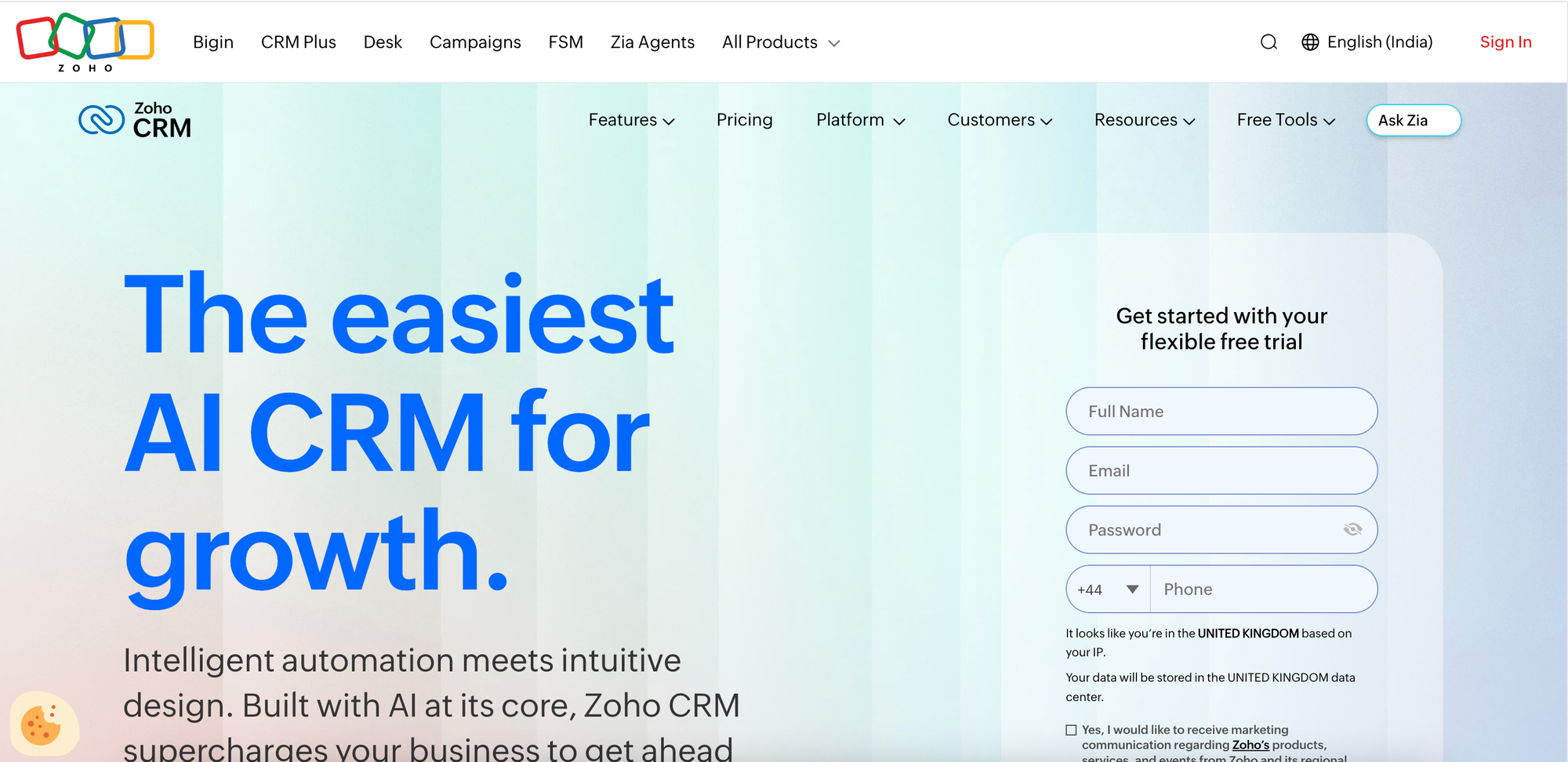
Zoho CRM keeps Pipedrive's pipeline approach for about a third less per seat. Teams already using Zoho Books, Desk or Campaigns get the tightest fit.
Strengths
- Free plan for up to 3 users.
- Zia AI assistant for lead scoring, email sentiment and anomaly alerts.
- Highly configurable workflows, modules and layouts.
Limitations
- Many features live in separate Zoho apps with their own subscriptions.
- The interface is inconsistent across modules and takes longer to learn.
Pricing: Standard $14, Professional $23, Enterprise $40, Ultimate $52 per user/month (annual).
Choose Zoho if cost matters most and you are willing to spend time on setup. See also Zoho CRM alternatives.
4. Freshsales: cheapest per-seat Pipedrive alternative
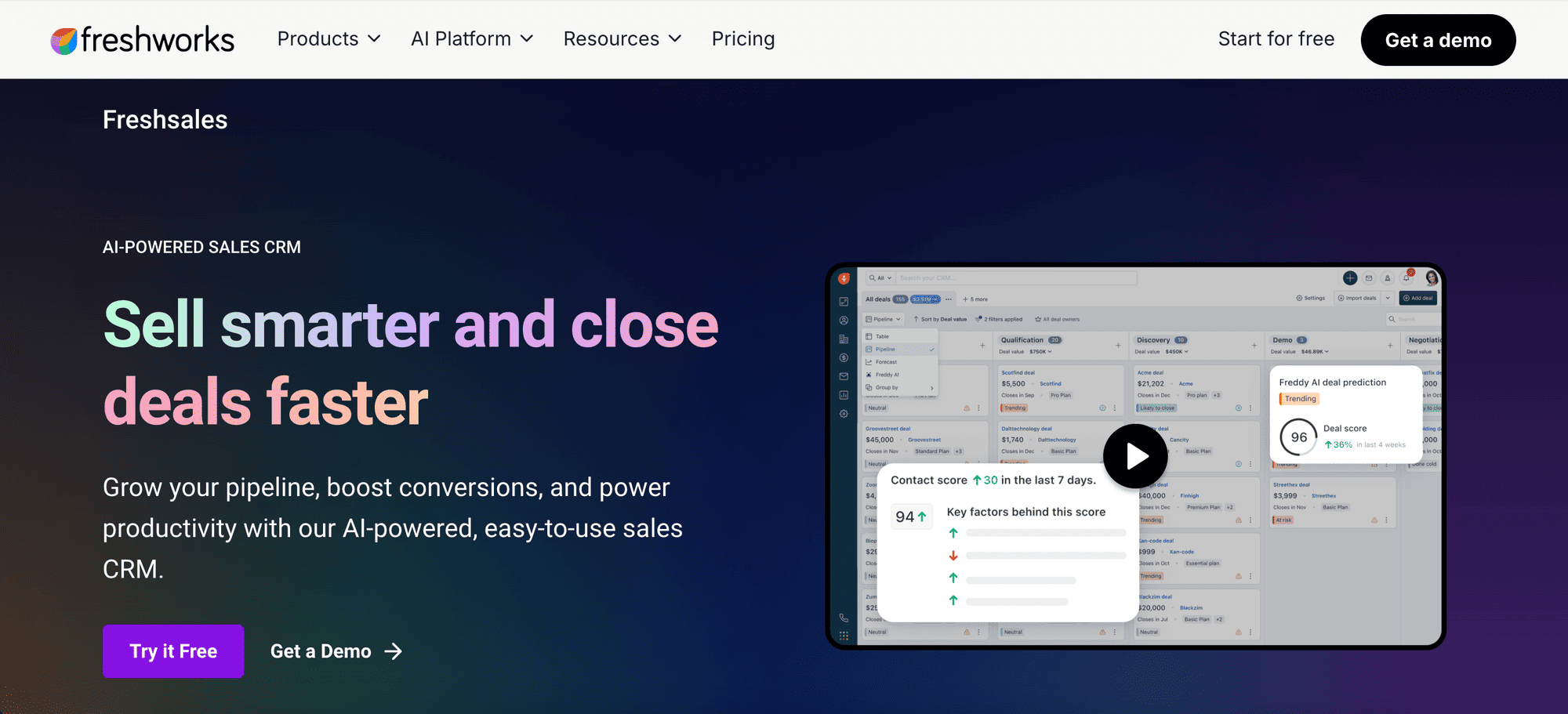
Freshsales is the closest like-for-like swap for teams that like how Pipedrive works but not what it costs. At $7 per seat, five reps cost less than a single Pipedrive Growth seat, and the product includes a built-in phone and Freddy AI lead scoring.
Strengths
- Freddy AI lead scoring and contact enrichment.
- Built-in phone, email and pipeline in one product.
- Clean interface and quick onboarding.
Limitations
- Less customizable than Zoho or Salesforce.
- Live chat and help desk are separate products (Freshchat, Freshdesk).
Pricing: Growth from $9 per user/month (annual).
Choose Freshsales if you want a like-for-like pipeline CRM at the lowest price per seat.
5. Salesforce Sales Cloud: best Pipedrive competitor for enterprise sales teams
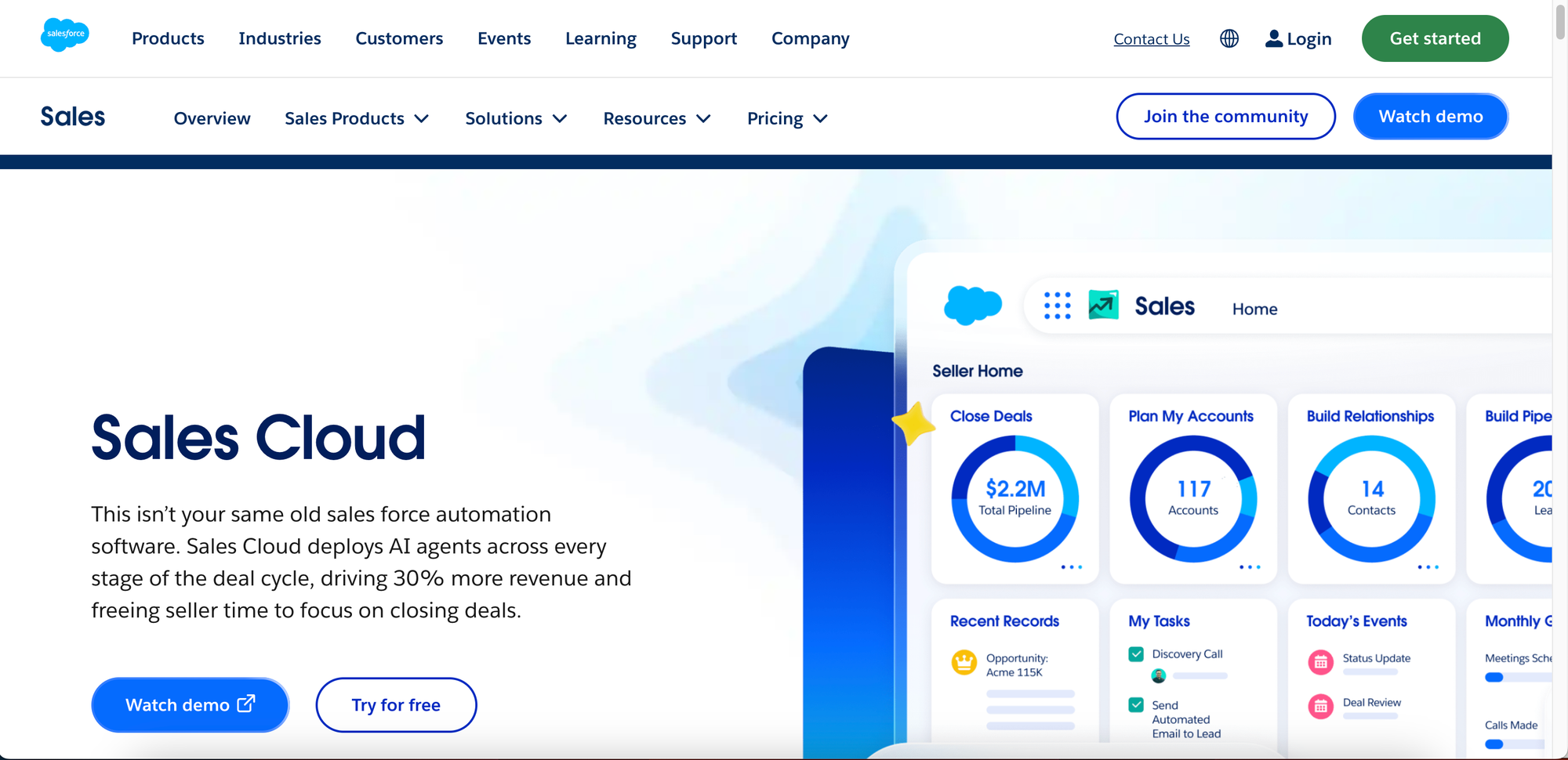
Salesforce Sales Cloud is built for teams that have outgrown Pipedrive's permissions and reporting: regional territories, deal approvals, forecasts by manager. Almost every object, rule and workflow can be customized, and it has a wide range of built-in AI features. Almost every object, rule and workflow can be customized, and it has a wide range of built-in AI features.
Strengths
- Territory management, approval processes and forecasting by region.
- The AppExchange marketplace and a large partner ecosystem.
- Scales from a small team to thousands of users.
Limitations
- The Pro Suite tier costs $100 per user/month.
- Implementation usually needs an admin or partner.
- Once your processes are built in Salesforce, moving out is a project in itself.
Pricing: Starter Suite from $25 per user/month.
Choose Salesforce if you are heading past 50 reps with territories and approvals.
6. monday CRM: best for combining sales and project management
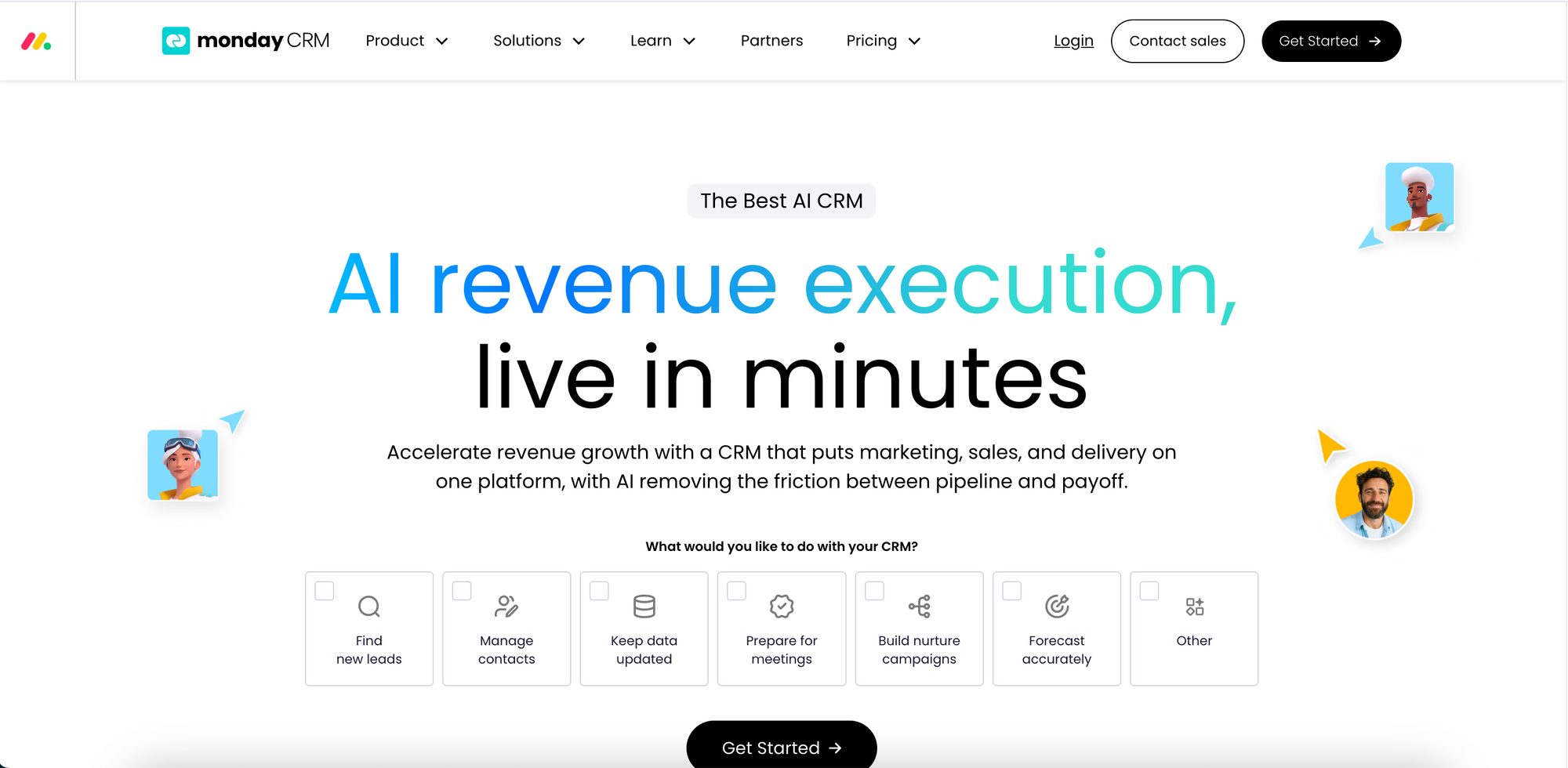
monday CRM puts the sales pipeline on the same boards your team already uses to plan projects. If you'd otherwise run Pipedrive for sales and monday.com for delivery, a won deal can move straight into onboarding without a handoff between tools.
Strengths
- Drag-and-drop boards and hundreds of no-code automation recipes.
- An AI automation builder that turns a plain-language description into a workflow.
- Pipelines, onboarding and projects in one place.
Limitations
- Lead scoring, routing and forecasting need custom setup.
- Boards get messy fast if nobody owns the setup.
- Minimum 3 seats, so the real entry price is $36/month.
Pricing: Basic from $12 per seat/month (annual); free plan for up to 2 seats.
Choose monday CRM if your team already lives on monday.com.
7. Close: best sales CRM for high-volume calling
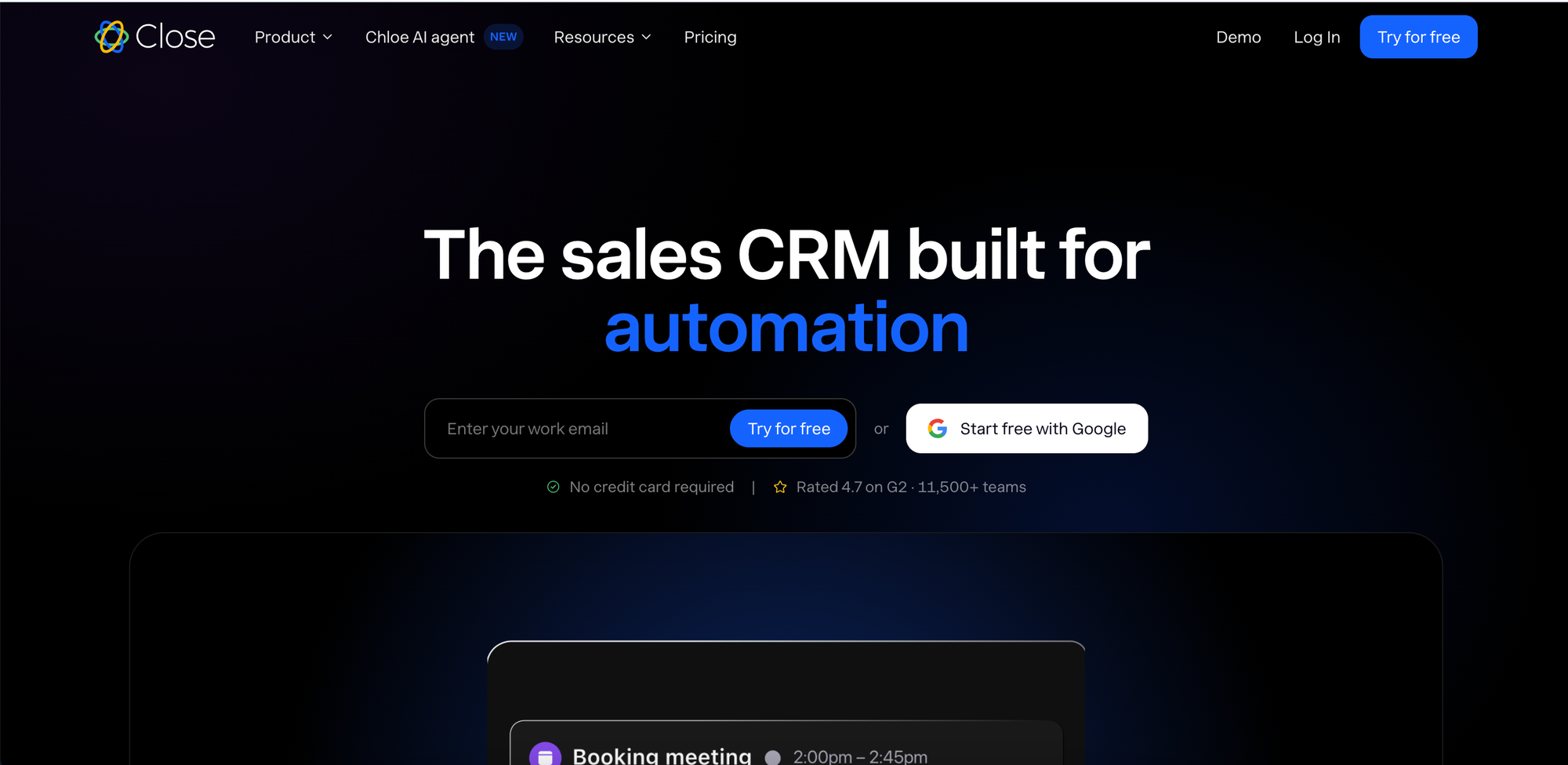
Close is a sales CRM built for reps who spend most of the day on the phone. Calling, SMS and email sequences are built in, so the separate dialer subscription many teams pay for on top of Pipedrive is the first cost to go.
Strengths
- Built-in VoIP dialer and SMS.
- Fast, reliable two-way email sync.
- Outbound sequences for calls and emails.
Limitations
- Almost no marketing tools.
- No native messaging apps or advanced lead routing.
Pricing: Startup from $49 per seat/month (annual).
Choose Close if your reps make dozens of outbound calls a day.
8. Salesflare: best for sales teams that want less manual data entry
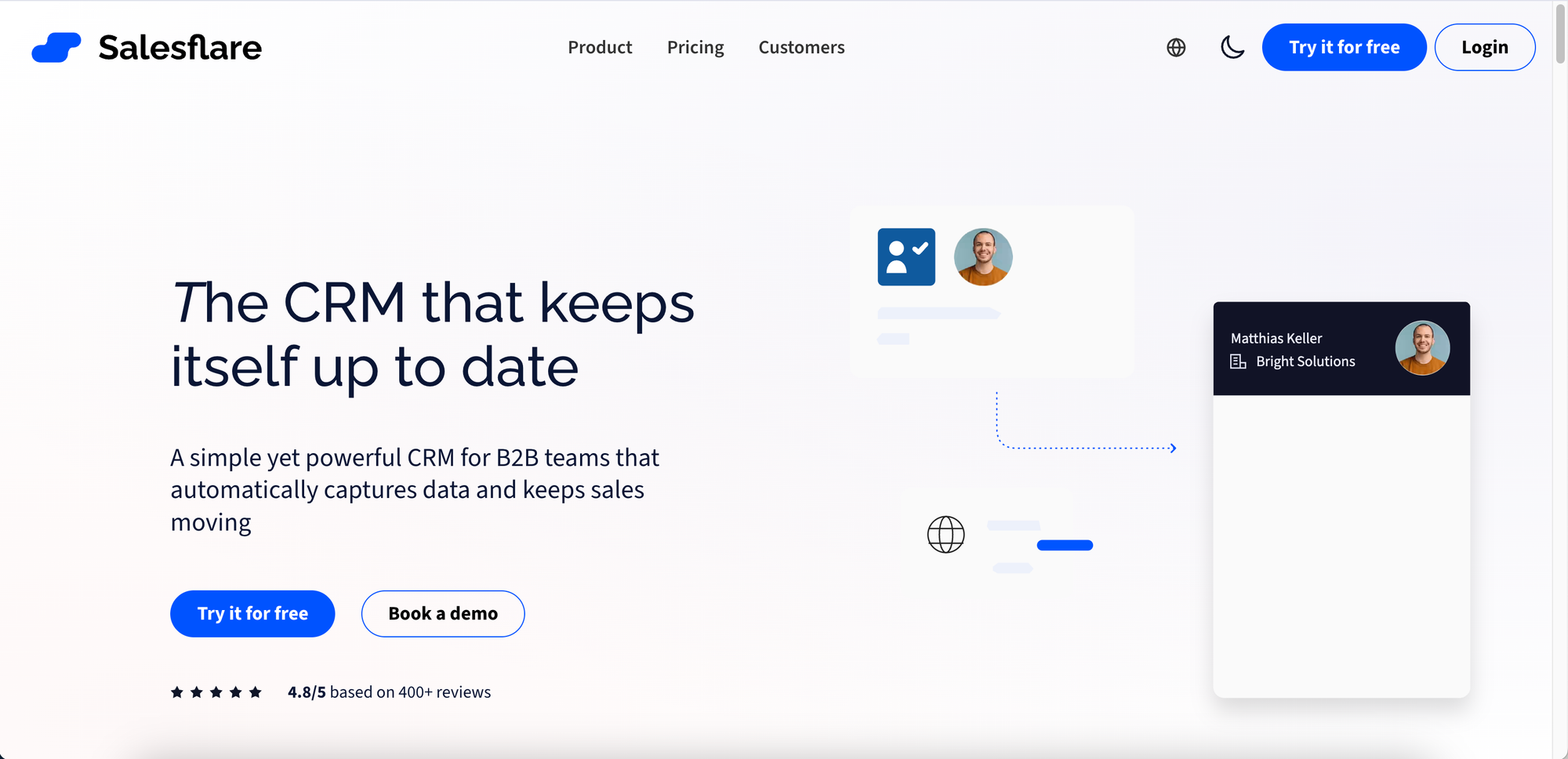
Salesmate will feel familiar to anyone coming from Pipedrive: a Kanban pipeline, a similar layout and similar pricing. The difference is that calling, SMS and email sequences come built in rather than bolted on.
Strengths
- Automatic data capture and customer timelines.
- Email, link and website visit tracking.
- Sidebars for Gmail, Outlook and LinkedIn; full-featured mobile apps.
Limitations
- Advanced workflows, permissions and custom dashboards need the Pro plan.
- Not built for complex enterprise processes or marketing beyond email.
Pricing: from $29 per user/month (annual); 30-day free trial.
Choose Salesflare if your reps skip CRM updates and you want the CRM to fill itself.
9. Salesmate: best CRM like Pipedrive with built-in calling and SMS
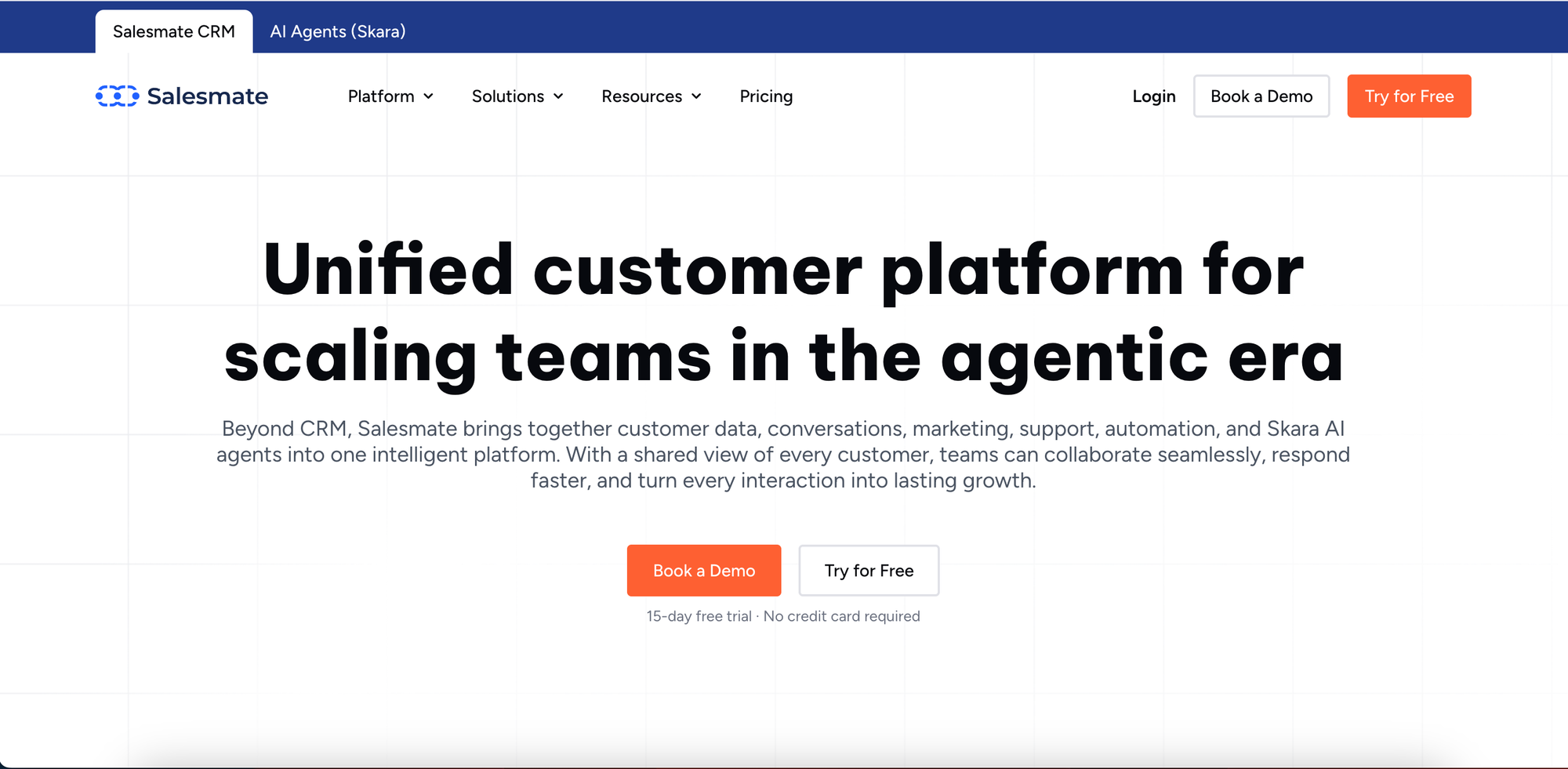
Salesmate looks and works much like Pipedrive, with calling, SMS and email sequences built in rather than sold as add-ons.
Strengths
- Native calling, SMS, call recording and power dialer.
- Multi-step email and SMS sequences.
- Website chatbot, lead forms, inbox rotation and email warm-up.
Limitations
- Sales-focused, like Pipedrive.
- Fewer native integrations; many connections run through Zapier.
Pricing: from $23 per user/month (annual).
Choose Salesmate if you want Pipedrive's feel with calling and SMS included. See our Pipedrive vs Salesmate comparison.
10. Copper: best for simple Google Workspace integration

Copper is built for Google Workspace and shows CRM context in Gmail, Calendar and Drive. It suits teams that want relationship tracking with almost no setup and don't sell through messaging apps. Compared to Pipedrive, it trades pipeline depth for a much shorter setup.
Strengths
- Gmail, Google Calendar and Drive integration with automatic contact capture.
- Low-friction adoption for Google-first teams.
- Simple pipelines and relationship history.
Limitations
- Workflow automation and bulk email start on Professional ($59 per user/month).
- No messaging apps; limited value outside Google Workspace.
Pricing: Basic from $23 per user/month (annual).
Choose Copper if you want a simple contact and deal tracker in Google Workspace. Choose NetHunt CRM instead if you also need automation, messaging apps and custom record types on the entry plan. Compare more CRMs for Google Workspace.
Is there a free Pipedrive alternative?
Yes. Pipedrive has no free plan, only a 14-day trial. HubSpot, Zoho CRM, monday CRM, Bitrix24 and Vtiger all offer permanent free plans, each with limits on users, records or features.
| Tool | Free plan limit | Best for |
|---|---|---|
| HubSpot | Free CRM tools; paid seats needed for advanced sales features | Small teams that will grow into marketing tools |
| Zoho CRM | Up to 3 users | Very small teams on a tight budget |
| Bitrix24 | Unlimited users with storage limits | Teams that also want project management, chat and an intranet |
| Vtiger | Up to 10 users, 3,000 contacts, 1,000 email sends per month | The most generous free user count |
| monday CRM | Up to 2 seats | Solo founders already on monday.com |
Free plans work for testing a process or running a solo pipeline. Most teams move to a paid plan once they need automation, several pipelines or more than a few users.
NetHunt CRM has no free plan, but startups three years old or younger get three months free through its Startup Program, while the next nine month are only $15/user/month with all features included.
Best Pipedrive alternatives for startups and small businesses
For early-stage startups, start free: HubSpot and Zoho CRM cost nothing for a few users. Once the team runs on Google Workspace and sells through email and messengers, NetHunt CRM covers that without add-ons. Startups that are three years old or younger can join the NetHunt CRM Startup Program. It gives three months free, then $15 per user/month for the next nine months, and 50% off in the second year.
Price-sensitive SMBs with 5–20 reps get the lowest per-seat cost from Freshsales or Zoho CRM Standard, and phone-heavy teams should look at Close or Salesmate.
A useful test for any small team: import 50 real contacts, move 5 deals through your stages and send one follow-up sequence in the trial. The tool your reps open without being reminded is the right one. For a wider shortlist, see the best CRMs for small business.
At $15 per user/month, NetHunt sits in the same price range as Zoho CRM ($14) and below HubSpot Starter ($20) for a startup's first year. That comparison works in your favor. If you want to spell it out, add this after the program sentence:
For a 5-person startup, that's $75/month in the first year after the free period, compared with $195/month on Pipedrive Growth.
NetHunt CRM vs Pipedrive: CRM features, automation and pricing
Pipedrive is the simpler choice for a sales-only team that wants a visual pipeline. NetHunt CRM fits Gmail-first teams that also need messaging apps, custom record types and automation included in every plan.
| Pipedrive | NetHunt CRM | |
|---|---|---|
| Core strength | Visual pipeline management | CRM inside Gmail with automation and multi-channel selling |
| Where you work | Standalone web app with email sync | Directly inside Gmail and Google Workspace + web app |
| Lead capture | Web forms and chatbot via LeadBooster add-on on Lite and Growth | Web forms, emails, calls and messenger lead capture included |
| Customization | Custom fields on fixed objects (Deals, People, Organizations, Products, Projects) | Custom folders, record types, fields, views and pipelines, maximum flexibility |
| Automation | Automation builder from Growth ($39) | Multi-step workflows: triggers on new records, field changes, emails and messenger chats; actions create records, assign owners, create tasks, send emails and move deals |
| Messaging apps | Marketplace integrations | Direct integrations with WhatsApp, Instagram, Telegram, Viber, Facebook Messenger |
| Email campaigns | Campaigns add-on | Built in, with segmentation |
| Reporting | Built-in reports; forecasting on higher plans | Built-in reports plus Looker Studio and BigQuery |
| Free option | 14-day trial | 14-day trial |
| Entry price (annual) | $14 per seat (Lite) | $24 per user (Basic) |
For the full breakdown, see our NetHunt CRM vs Pipedrive comparison.
Where NetHunt CRM is stronger: teams that live in Gmail, sell through messengers, or need to track more than deals, such as partners, renewals or onboarding, in linked records without paying for add-ons.
Where Pipedrive is stronger: the most polished pipeline interface on this list, a larger marketplace (500+ apps), a cheaper entry plan, and a better fit for teams on Outlook.
When to stay on Pipedrive
Stay on Pipedrive if it already works for your team. Switching CRMs costs weeks of setup and retraining, so it only pays off when a real gap is costing you deals or money.
Three situations where staying is the better call:
- Your sales cycle is simple and you run no marketing campaigns. Pipedrive's pipeline is built for exactly this, and a broader platform adds tabs nobody opens.
- You are a team of one or two and the price doesn't hurt. The cost gap between Pipedrive and cheaper alternatives only becomes large as headcount grows.
- Your reps actually use it. A CRM everyone updates is worth more than a better one nobody fills in.
Before you switch, check whether the problem can be fixed inside Pipedrive: remove unused add-ons, clean up stages, or change plans. If the real issue is that reps don't log activity, a new CRM won't fix that by itself.
How to choose the right Pipedrive alternative for your sales team
Pick the CRM system for your business by the gap that is pushing you off Pipedrive, not by brandMatch your main problem to the tools built to solve it.
| If your main problem is… | Look at | Why |
|---|---|---|
| Pipedrive feels too expensive per seat | Freshsales, Zoho CRM | Same pipeline approach for $9–$14 per seat |
| Your team lives in Gmail and Google Workspace | NetHunt CRM, Copper | CRM inside Google Workspace; NetHunt adds automation and messaging apps on the entry plan |
| Deals close on WhatsApp, Instagram or Telegram | NetHunt CRM, HubSpot (higher plans) | Messaging conversations linked to CRM records |
| Marketing and sales run on separate tools | HubSpot, NetHunt CRM, Zoho CRM | Campaigns and deals on one contact database |
| Reps make dozens of calls a day | Close, Salesmate | Built-in dialer and SMS |
| Reps don't update the CRM | Salesflare | Automatic data capture from email and meetings |
| Delivery and sales need one workspace | monday CRM | Sales pipeline on project boards |
| You are passing 50 reps with territories | Salesforce, HubSpot | Permissions, territories and forecasting at scale |
| You need a free CRM | HubSpot, Zoho CRM, Vtiger | Permanent free plans |
How to migrate from Pipedrive without losing CRM data
A clean Pipedrive migration takes seven steps, and the import order matters most: organizations first, then people, deals and activities. Import deals before organizations and they arrive unlinked, so you have to reconnect them by hand.
- Write down why you are switching. Cost, Gmail workflow, automation, channels or reporting. This decides what you rebuild first.
- Audit your Pipedrive setup. List pipelines, stages, custom fields, automations, integrations, reports and permissions. Drop what nobody uses before you migrate.
- Export everything. In Pipedrive, open Tools and apps → Export data and export organizations, people, deals, activities and notes as CSV or XLSX. Screenshot each pipeline, because stage names and order don't travel cleanly.
- Clean and map fields. Remove duplicates and build a mapping sheet for stages, custom fields, owners, lead sources and activity types.
- Import in order, starting small. Organizations → people → deals → activities. Test with 20–50 records and check that links, owners and stages survived before importing the rest.
- Rebuild key automations and train on real deals. Start with new-lead assignment, follow-up reminders and stage-change tasks. Train reps on their own deals, not a generic product tour.
- Run both tools for two weeks. Log all new activity only in the new CRM, then export Pipedrive one last time before you cancel.
Automations, email templates and integrations don't transfer between CRMs. For NetHunt, follow our guide to switching from Pipedrive and the Pipedrive import help article; our support team can help with the import.
The bottom line
If Pipedrive still fits, stay. If you're leaving, pick by the gap: Freshsales or Zoho CRM for price, HubSpot for marketing, Salesforce for scale, and NetHunt CRM if your team works in Gmail and sells through messaging apps. Run a two-week trial with real deals before you commit to a new CRM solution.






 product experts — let's find the best setup for your team